




Excursion from Marrakech: Atlas, Ourika, Agafay Desert
- by weshoreadmin
- Posted on
- Attractions and Activities in Marrakech, Stays and Experiences in Marrakech
Marrakech possesses a rare gift: it opens onto entire worlds, all different, all accessible in less than an hour and a half. To the south, the peaks of the High Atlas rise, sometimes snow-capped, dotted with Berber villages clinging to the rock. To the east, the Ourika Valley unfolds its ribbon of greenery and fresh water. To the southwest, the Agafay Desert extends its mineral hills to the horizon, beneath light that changes throughout the day.
Three directions, three atmospheres, three memories. This is the art of a stay in Marrakech: alternating between the vibrancy of the medina and escape into these magnificent landscapes, then returning in the evening to the tranquility of your villa. This guide takes you on a journey to discover the three most beautiful escapes at the gates of the Red City, transforming a simple stay into a true voyage.
Marrakech, Gateway to Three Worlds
What makes Marrakech unique is not only the city itself. It is its position as a crossroads, at the foot of the High Atlas and on the edge of the desert. In just a few dozen minutes by road, one passes from olive groves to terraced crops, from steep mountain slopes to lunar desert expanses.
The mountain, the oasis, the desert: three radically different ecosystems, each within reach of a half-day or full-day excursion. The High Atlas for altitude, freshness, and cultural immersion. The Ourika Valley for greenery, water, and gentleness. The Agafay Desert for a change of scenery, adventure, and unforgettable sunsets.
The most beautiful part of all this? You do not have to choose. Over a week-long stay, it is entirely possible to experience all three, always keeping your villa as your home base, that haven where you return to rest after each escape.
The High Atlas: The Berber Mountain
Less than an hour from Marrakech, the High Atlas changes everything. The air becomes cooler, the light sharper, and the scenery transforms into a mineral theater where stone villages seem suspended between heaven and earth. This is the escape for lovers of authenticity, those seeking to touch rural, ancient Morocco.
Landscapes Between Snow-Capped Peaks and Suspended Valleys
The road climbing toward the Atlas is a spectacle in itself. As one ascends, the arid plains give way to terraced crops, olive groves, and almond trees in bloom during spring. The peaks stand out on the horizon, some crowned with snow for much of the year, notably the Toubkal massif which rises to over 4,000 meters, at an altitude close to that of Mont Blanc.
The valleys follow one another, each with its own character. The earthen pisé houses, earth-colored, cling to the mountainsides, their terraced roofs used for drying harvests. The river winds below, nourishing verdant gardens that contrast with the ochre-red of the reliefs. It is a landscape that commands respect, shaped by centuries of agricultural life and human patience.
Life in the Berber Villages
The true treasure of the Atlas is its inhabitants. The Amazigh communities have lived here for generations, perpetuating a traditional way of life governed by the seasons, herds, and crops. Visiting a Berber village means entering another time, one of sincere hospitality, shared tea, and ancestral gestures.
One discovers how argan oil is produced by hand, how women weave carpets, how houses are built with materials from the earth. Children wave as you pass, elders observe from their doorsteps. This is not a tourist backdrop: it is real life, generous, opening itself to those who take the time to show interest.
The Moment to Experience: Lunch with a Local Family
If one had to retain a single moment from the Atlas, it would be this: lunch on the terrace of a Berber house, facing the mountains. Mint tea poured from high, frothy and sweet. The tagine that has been simmering since morning, fragrant with cumin and saffron. Bread baked in the village oven. Silence, disturbed only by the wind and the distant tinkling of a herd.
It is a moment of pure disconnection, a thousand leagues from the bustle of Marrakech yet so close. One eats slowly, contemplates, breathes. And one understands why so many travelers keep the Atlas as the most memorable part of their stay.
The Ourika Valley: The Verdant Oasis
If the Atlas is the mountain, Ourika is water. Barely an hour from Marrakech, this High Atlas valley, carved by the river of the same name, offers a striking contrast to the heat of the city. Here, everything is green, fresh, alive. It is the ideal escape to breathe, refresh yourself, and enjoy nature with family or friends.
A Green Escape at the Gates of Marrakech
The journey to Ourika is a gentle transition. One leaves the plains, follows the wadi, and gradually the vegetation becomes denser. Willows, walnut trees, terraced gardens, fruit crops: the valley unfolds a lush landscape that contrasts with the surrounding aridity. The freshness is palpable; it is not uncommon to gain several degrees as you ascend the valley, a welcome relief during hot summer days.
The winding road offers a succession of spectacular viewpoints: kasbahs dominating the valley, the wadi winding between gardens, Berber villages clinging to the slopes. It is an excursion accessible to all, including children, making it one of the favorite outings for families.
The Setti Fatma Waterfalls
The highlight of the valley is the village of Setti Fatma, perched at 1,500 meters altitude, famous for its seven waterfalls. The village marks the end of the paved road: beyond, exploration continues on foot. One crosses a wooden footbridge suspended above the river, then begins the ascent toward the waterfalls, from rock to rock.
The first waterfall is reached after about thirty minutes of walking. The most motivated continue toward the following ones, in an increasingly wild and refreshing setting. The route, popular with Moroccans themselves, requires closed shoes and some agility, but the reward is worth it: waterfalls fed by the melting snows of the High Atlas, in preserved nature.
The village bears the name of a woman respected for her wisdom, who, according to legend, made water spring forth by striking the ground with her staff. A story that adds a spiritual dimension to the beauty of the place.
The Moment to Experience: Lunch with Your Feet in the River
Upon returning from the hike, it is time for the most emblematic ritual of Ourika: lunch with your feet in the water. Along the river, small restaurants have set up their tables directly in the riverbed, on platforms or among the rocks. One sits down, removes one’s shoes, and lunches with feet refreshed by the current.
Tagine, grilled skewers, Moroccan salad, mint tea: the cuisine is simple and flavorful, enhanced by the setting. The sound of water, the shade of trees, the ambient freshness—it is a moment of pure sensory happiness, the kind of instant that alone summarizes why one travels. Far from the heat of Marrakech, one feels revived.
The Agafay Desert: The Saharan Illusion
No need to drive for hours toward the south to taste the atmosphere of the desert. Just 40 minutes from Marrakech, the Agafay Desert offers a striking Saharan escape, without sand dunes, certainly, but with lunar landscapes of raw beauty that have captivated travelers from around the world. This is the escape of immediate change of scenery and memorable sunsets.
A Desert 40 Minutes from Marrakech
Agafay is a stone desert, made of arid, undulating hills that stretch as far as the eye can see, with the snow-capped silhouette of the Atlas as a backdrop. The contrast is spectacular: these mineral expanses, almost lunar, which seem to belong to another continent, yet so close to the city.
Proximity is Agafay’s major asset. Where the real sand desert requires an expedition of several days, Agafay can be experienced in a half-day, an evening, or a night under the stars. It has become one of the most sought-after places in the Marrakech area, with its luxury camps, panoramic restaurants, and contemporary Berber tents dotting the hills.
Quad, Dromedary, and Adventures on the Trails
Agafay is a life-sized playground. The trails that crisscross the hills lend themselves wonderfully to quad or buggy rides, in a cloud of dust and sensations. For a more contemplative approach, a dromedary ride offers the classic desert tableau, at the slow, swaying pace of the animal.
Thrill-seekers can also try paddle boarding on the nearby Lalla Takerkoust lake, hot air ballooning at sunrise, or horseback riding between the hills. Whatever activity is chosen, the scenery remains the same: these sublime mineral expanses that make Agafay an open-air photo studio.
The Moment to Experience: Sunset at the Berber Camp
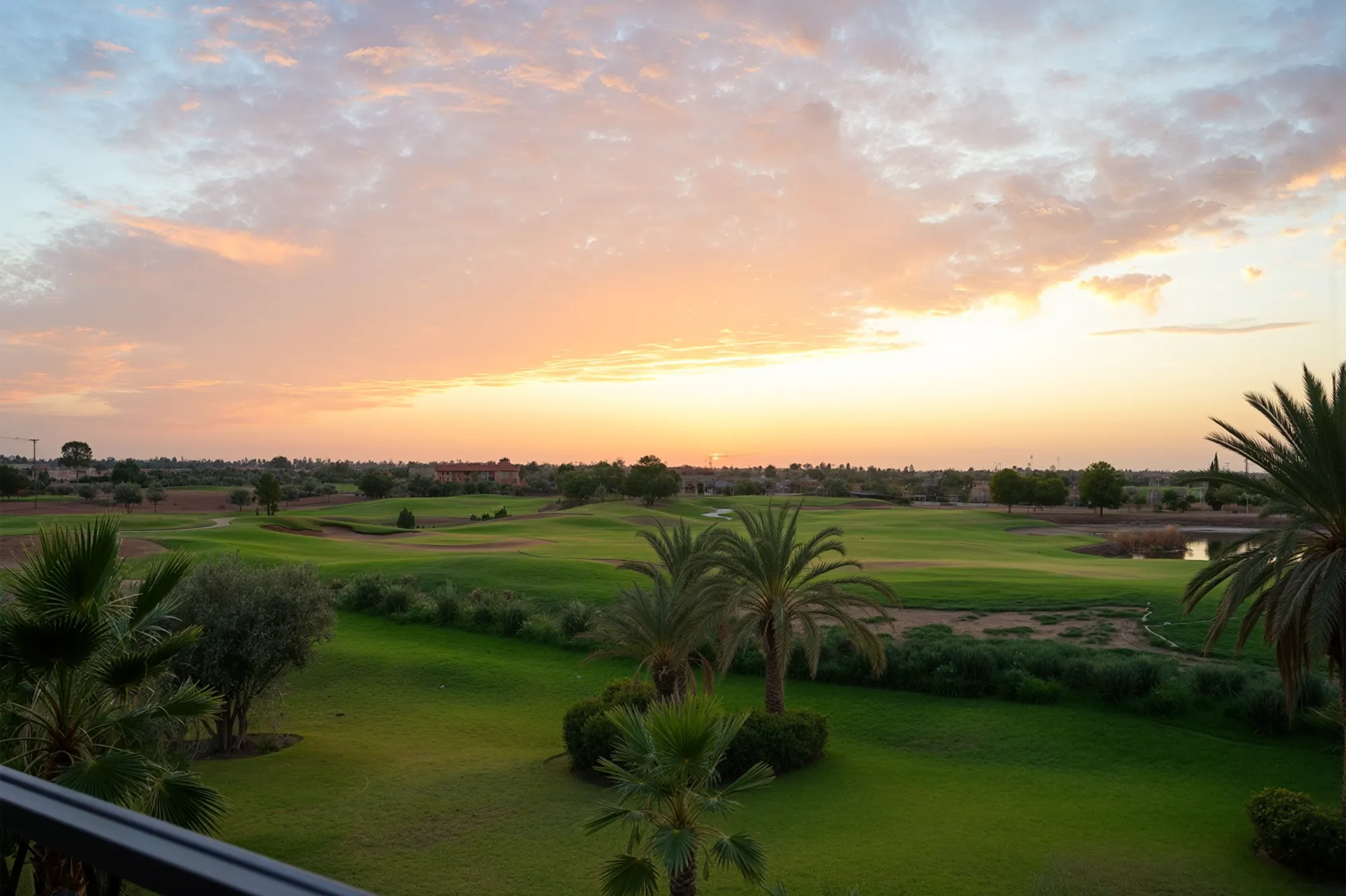
This is Agafay’s signature experience, the one that alone justifies the journey. As the sun descends, the hills take on orange, pink, then purple hues. The light becomes surreal, silence settles in, and one understands why this place fascinates so much.
Settled in a Berber camp, kilim rugs, soft cushions, table set facing the horizon, one savors mint tea then dinner under the stars, lulled by the rhythms of Gnawa music. When night falls, far from the city lights, the sky fills with stars of rare density. Some choose to spend the night on site, in a luxury tent, to prolong the magic until sunrise. It is a suspended moment, of a beauty that leaves a lasting impression.
Which Excursion to Choose? The Guide According to Your Desires
Atlas, Ourika, Agafay: three escapes, three atmospheres. The right choice depends above all on what you are seeking and the time you have available. This table helps you find the excursion that suits you:
You are looking for... |
The ideal destination |
|---|---|
Freshness and greenery
|
Ourika Valley
|
Immersion in Berber culture
|
High Atlas
|
An unforgettable sunset
|
Agafay Desert
|
An easy family outing
|
Ourika Valley
|
Spectacular mountain landscapes
|
High Atlas
|
Adventure and thrills
|
Agafay Desert
|
Total change of scenery close to the city
|
Agafay Desert
|
A hike in the heart of nature
|
Ourika Valley or High Atlas
|
If your stay permits, the ideal is to combine all three. Reserve Ourika for a hot day when freshness will be welcome, the Atlas for deeper cultural immersion, and Agafay for a magical evening at sunset. To choose the right time of year, our guide When to Visit Marrakech will provide all the keys.
The Luxury of Returning to the Villa After Adventure
There is something precious about the return, after a day of excursion. Legs tired from walking in the Atlas, skin still fresh from the water of Ourika, eyes full of the colors of the desert, and then the villa gate opens, the pool shimmers, the calm welcomes you.
This is the advantage of having a villa as your base camp. No crowded hotel lobby, no impersonal room: your space, your garden, your pool to relax in. A plunge, a shower, a drink on the terrace while the sun sets. The staff preparing dinner while you recount your day. Adventure by day, comfort by evening—this is the perfect balance of a successful stay in Marrakech.
Discover our selection of villas in Marrakech to find the ideal home base for your escapes to the Atlas, Ourika, and the Agafay Desert.
Frequently Asked Questions
What is the best day trip from Marrakech?
It depends on your desires. The Ourika Valley is the most accessible and refreshing, ideal for families and during hot days. The High Atlas offers the deepest cultural immersion. The Agafay Desert is unbeatable for a sunset and total change of scenery. All three can easily be done as day trips from Marrakech.
Is it better to do the Atlas, Ourika, or Agafay?
Each destination has its own identity. Choose Ourika for greenery and water, the Atlas for mountains and Berber villages, Agafay for desert atmosphere and sunsets. If you are hesitating and your stay lasts several days, the ideal is to experience all three—they are complementary and offer very different experiences.
Can several excursions be combined in the same stay?
Absolutely, and it is even recommended for a week-long stay. Since the three destinations are located in different directions but all close to Marrakech, you can easily combine a day in Ourika, another in the Atlas, and an evening in Agafay, while returning to sleep in your villa between each escape.
In which season should each excursion be done?
Ourika is pleasant year-round, and particularly appreciated in summer for its freshness. The Atlas is ideally visited from spring to autumn, with snow-capped peaks in winter for lovers of spectacular landscapes. Agafay can be enjoyed year-round, but spring and autumn offer the mildest temperatures for outdoor activities and evenings at camp.
Are the excursions suitable for children?
The Ourika Valley is the most suitable for families, with accessible walks and riverside restaurants. Agafay appeals greatly to children thanks to the dromedaries and camp atmosphere. For the Atlas, favor gentle walks in the villages rather than long hikes if you are traveling with young children.